Townhome And Condo Living In Coon Rapids: A Buyer’s Guide
May 7, 2026
May 7, 2026
Thinking about buying in Coon Rapids but not sure whether a townhome, condo, or detached house makes the most sense? You are not alone. For many buyers, attached living offers a smart path to homeownership with less exterior upkeep and a lower entry price than many single-family homes, but it also comes with monthly dues, shared rules, and a different kind of ownership experience. This guide will walk you through what to expect so you can decide with confidence. Let’s dive in.
Coon Rapids gives you a meaningful mix of townhomes, condos, and detached homes, which makes it a practical place to compare options side by side. In March 2026, Redfin reported a median sale price of $336,000 in Coon Rapids, while Realtor.com showed a median listing price of $339,999 and about 130 homes for sale.
Attached homes often come in below the detached-home median, which is part of their appeal. County-level data from Anoka County’s 2023 housing analysis showed a median list price of $366,900 for detached single-family homes in Coon Rapids, compared with $262,450 for multifamily listings.
That gap does not mean every townhome or condo is a bargain. Newer, larger, or updated attached homes can narrow the price difference, especially if they include features like an attached garage, extra bathrooms, or a larger floor plan.
If you are deciding between the two, it helps to start with what current listings look like in the local market. In spring 2026 snapshots, Zillow showed 34 townhome listings and 7 condo listings in Coon Rapids, compared with 61 single-family listings.
Current Coon Rapids townhome listings cover a wide range. Examples ran from a 1-bedroom, 1-bath, 554-square-foot unit at $130,000 to a 3-bedroom, 4-bath, 2,720-square-foot unit at $340,000, with many 2-bedroom, 2-bath options landing in the low-$200,000s to low-$300,000s.
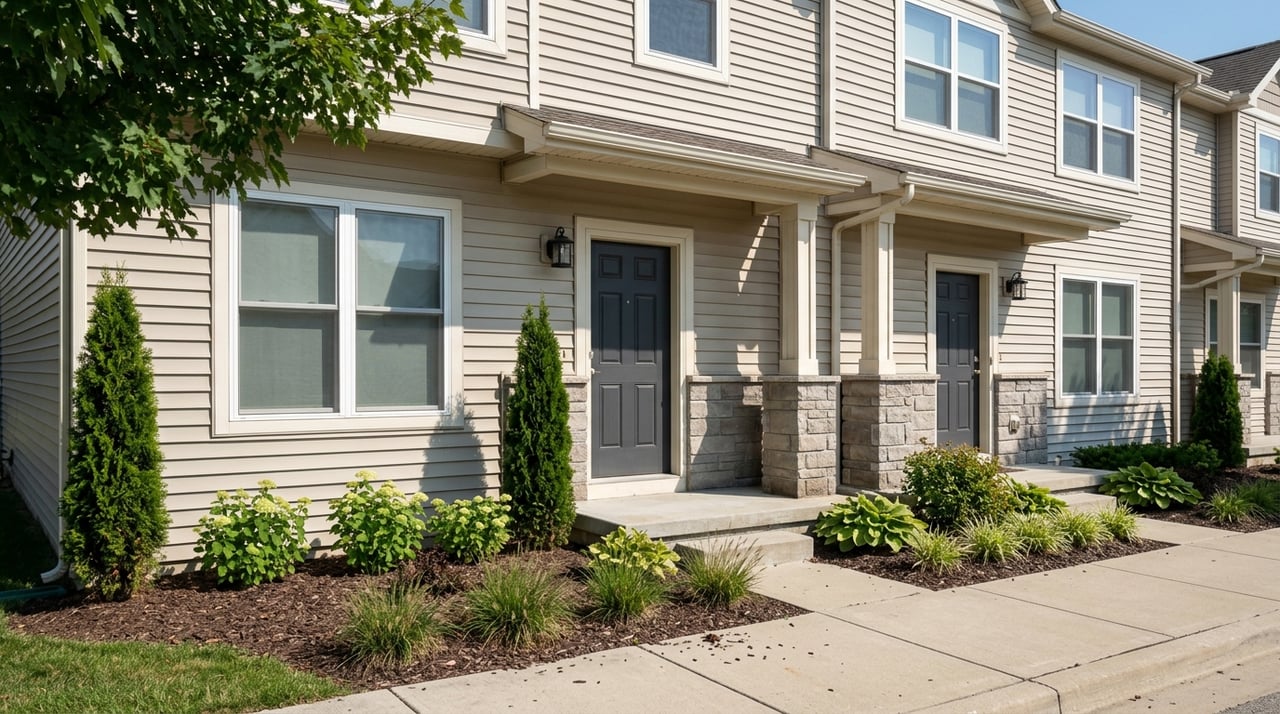
Many townhomes offer a more house-like feel than condos. In the current listing mix, common features include one-level living, two-story layouts, attached garages, patios or decks, and larger end-unit floor plans.
Condos in Coon Rapids are generally smaller and lower priced than the townhome sample. Current listings included 2-bedroom, 1-bath units around 832 to 1,128 square feet priced from $164,900 to $190,000, plus a 3-bedroom, 2-bath, 1,350-square-foot unit at $230,000.
Condo options may appeal to buyers who want the lowest entry point and minimal exterior responsibility. The current mix shows low-rise and upper-level styles, some private entrances, and occasional garage parking or shared-amenity settings.
Most Minnesota townhome and condo communities are common interest communities, often called CICs. That means you own your unit, but you also share responsibility for common areas through an association.
Under Minnesota law, associations are generally responsible for maintaining, repairing, and replacing common elements, while unit owners are generally responsible for their unit unless the community declaration says otherwise. The association also must maintain a written preventative maintenance plan and budget for common elements, carry required property and liability insurance, and keep reserve funds for future replacements.
This is where attached living feels different from owning a detached home. You may have less exterior work to manage yourself, but you also have another layer of documents, budgets, and rules that matter just as much as the home itself.
For many buyers, the biggest question is simple: what do the dues actually get you? In current Coon Rapids listing examples, HOA dues often fall around $200 to $400 per month.
Some listings say those dues cover services such as landscaping, snow removal, sanitation, garbage and recycling, and water and sewer. For buyers who want less day-to-day upkeep, that can be a major advantage.
Still, monthly dues are not just another utility bill. They are part of your carrying cost, so you need to weigh them against the purchase price, taxes, insurance, and your overall monthly budget.
A lower-maintenance lifestyle does not mean a no-surprise lifestyle. Minnesota guidance notes that associations can charge special assessments to cover unexpected or major expenses, such as roof replacement, paving, or window repairs.
That is why reserve funding matters so much. State guidance requires associations to maintain reserve funds and reevaluate whether those reserves are adequate over time, but buyers should still review the budget and ask direct questions before making an offer.
A community with healthy reserves may be better positioned for future repairs. A community with underfunded reserves may face a higher chance of added costs later.
One of the most important things to understand is that low-maintenance ownership still comes with rules. Minnesota guidance makes clear that associations can regulate issues like parking, pets, quiet hours, exterior appearance, and some unit-use matters.
That means one community may be a great fit for your lifestyle, while another may not. If you want broad freedom to change exterior features, store certain vehicles, or operate with fewer restrictions, a detached home may fit better.
If you value predictable exterior upkeep and do not mind community rules, a townhome or condo may feel like a practical compromise. The right fit depends less on the property type alone and more on how the specific association is run.
If there is any chance you may want to rent out the property in the future, do not assume all communities handle that the same way. Minnesota’s Commerce Department notes that rental limits are usually controlled by the association’s governing documents.
In practice, one Coon Rapids community may allow rentals freely, while another may require an owner-occupancy period, cap the number of rentals, or require board approval. That makes rental policy a key due-diligence item for buyers who want flexibility later.
Even if you plan to live in the home long term, it is still smart to know the rule now. Future plans can change, and rental restrictions can affect your options.
Minnesota requires sellers in these communities to provide important documents before closing. Those materials can give you a clearer picture of how the association operates and whether the home fits your budget and goals.
Here is a practical checklist to use as you review a Coon Rapids condo or townhome:
Minnesota guidance warns that unpaid assessments can become a serious collection issue and may lead to fines, liens, or foreclosure. That is another reason to understand the association’s policies before you commit.
Townhomes often work well if you want a middle ground between a condo and a detached house. In Coon Rapids, the current listing mix suggests they are a strong option for buyers who want more space, a garage, or a more traditional residential layout without taking on full yard and exterior responsibility.
That can make townhomes appealing for first-time buyers, downsizers, and busy professionals. You may get a more house-like layout while still outsourcing some of the exterior chores that come with detached ownership.
The tradeoff is that you still need to be comfortable with dues, association governance, and shared community standards. If that balance works for you, a townhome can be a very practical option.
Condos often make sense if your top priorities are affordability and minimal exterior maintenance. In Coon Rapids, current condo listings generally sit at a lower price point than many townhomes and detached homes.
That can make condos worth a close look if you want to become a homeowner while keeping your purchase price lower. They may also appeal to buyers who prefer a simpler footprint and do not need as much private outdoor space.
The flip side is that condos often come with more shared walls, more common spaces, and a stronger day-to-day connection to association rules. For some buyers, that is an easy trade. For others, it is a reason to keep looking.
If you are still on the fence, it helps to compare the big-picture tradeoffs.
| Option | Typical Strengths | Typical Tradeoffs |
|---|---|---|
| Townhome | More house-like layout, often includes garage, less exterior work | Monthly dues, shared rules, possible assessments |
| Condo | Lower entry price, minimal exterior upkeep | More shared spaces, less private outdoor area, association restrictions |
| Detached Home | More control and privacy | More maintenance responsibility, often higher price point |
In current Coon Rapids listings, many detached homes cluster in the low-to-mid $300,000s, with examples around $310,000, $324,900, $335,000, $348,500, $399,900, and $425,000. That helps explain why townhomes and condos remain an important part of the local market for buyers looking for another path into ownership.
Townhome and condo living in Coon Rapids can be a strong fit if you want a lower-maintenance lifestyle and a price point that may come in below many detached homes. The key is to look past the listing photos and monthly dues and understand the full ownership structure.
When you review the documents, budget, reserves, and rules carefully, you can make a much more confident decision. The best attached home is not just the one with the right layout or price. It is the one with an association, fee structure, and set of rules that fit how you want to live.
If you are comparing condos, townhomes, or detached homes in Coon Rapids, Epic Realty Inc can help you sort through the options and make sense of the details that matter before you buy.
October 15, 2026
October 8, 2026
October 1, 2026
September 24, 2026
September 17, 2026

September 10, 2026
September 3, 2026
August 27, 2026
August 20, 2026
We’re here to work alongside you to help you make informed decisions when buying or selling your home or investment. Contact us to get started today.