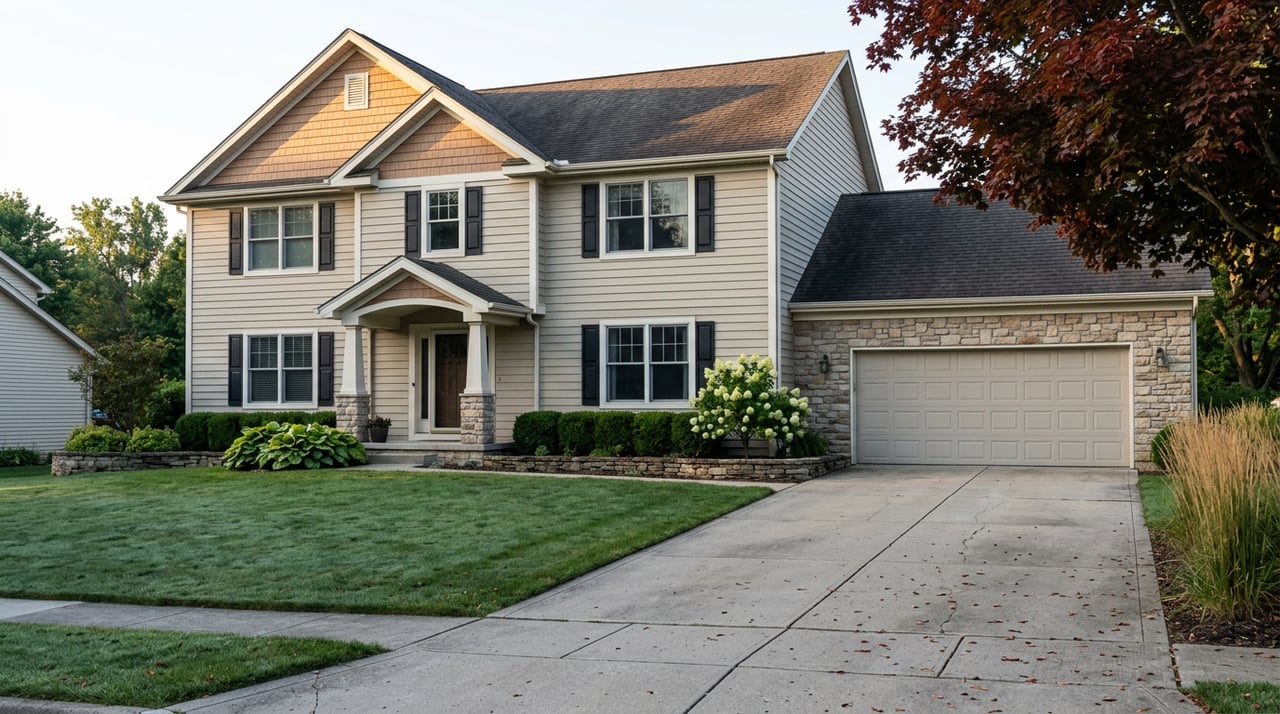
Champlin MN Home Values After Riverfront Redevelopment
September 3, 2026
September 3, 2026
A restaurant with a patio over the Mississippi River sounds like the kind of thing that moves comps. Champlin spent 26 years and outlasted five mayors to get here, and the final piece of that project, a waterfront restaurant called CHAR BLU Riverside, broke ground in 2025 and was slated to open by the end of that year, closing out a redevelopment three decades in the making. If you are comparing Champlin against Coon Rapids or Anoka right now, you have probably already seen the amphitheater photos and the median price on a portal somewhere. The available price measures differ. The project’s financing is also worth a look.
Mississippi Crossings is the name for the 160 acres along the river south of the historic Anoka-Champlin bridge, and it has been the subject of a redevelopment plan since a citizen task force recommended it back in 1999. The pieces that opened in the last three years give you a sense of scale: Jensen's Market opened in 2023, Cullens ice cream followed, the Bowline apartment building brought over 200 units into the footprint between Highway 169 and the river, and the Applewood Pointe senior cooperative added another 85 units near the bridge. Greco, the Twin Cities developer that took over as master developer of a 12-acre core parcel, worked with a hospitality consultancy to build out the event center and amphitheater that now host the city's Thursday summer concert series and an annual food truck festival on the plaza.
None of this is small. It is also not new news to anyone who already lives in Champlin, which is exactly why the finished restaurant matters differently to a buyer than to a resident. A resident already has the amphitheater. A buyer is trying to figure out whether the market has priced in a generational public investment or whether that premium is still sitting ahead of them.
Here is where it gets interesting, and where three different ways of measuring the same city produce three different stories.
| How the number is built | Reading | Time window | Year-over-year |
|---|---|---|---|
| Automated valuation estimate | $357,653 typical home value | mid-2026 | up 0.1% |
| Actual closed sales | $359,000 median sale price | November 2025 | down 4.3% |
| Live active listings | roughly $397,000 to $398,000 median list price | August 2026 | flat |
An automated estimate says Champlin is barely moving. A tracker built on closed sales says prices actually softened into late 2025, and it shows something else worth sitting with: average days on market for a Champlin home nearly tripled, from about 15 days a year earlier to 46 days. An active-listings feed pulling straight from the MLS says the asking side of the market sat flat through the middle of 2026. None of these three sources is wrong. They are measuring different things at different points in the sale process, and the fact that they diverge this much, right as a $100 million-plus redevelopment finished, tells you the amenity has not yet produced a clean, agreed-upon price signal. If Champlin's riverfront were the kind of catalyst that reliably pulls a city's comps upward the way people assume it should, you would expect these three measures to be converging upward together. They are not.
Part of the answer is that the money this project generated was never going to show up as a straightforward citywide bump, because of how it was financed.
Mississippi Crossings sits inside its own tax increment financing district, and Minnesota's legislature gave that district special treatment you will not find in a typical TIF plan. A Minnesota Department of Revenue analysis of the enabling legislation confirms lawmakers wrote a carve-out specifically for this district, one that "extends the five-year rule to ten years" and exempts it from the state's standard requirements for winding the district down once its debts are paid.
In plain terms, a standard Minnesota TIF district has to spend the tax increment it captures within five years of certain obligations or start winding down. Champlin's district got twice that runway, plus an exemption from the usual rules that force a district to decertify once its debts are paid. The captured property tax growth inside that footprint keeps funding the project itself for longer than a typical redevelopment district would allow, rather than flowing back into the general tax base that would otherwise show up as broader relief or reinvestment across the rest of the city.
There is a second, more granular layer that only affects properties actually inside the Crossings boundary. The city created a dedicated storm sewer improvement tax district specifically for this project, and the City of Champlin Code of Ordinances spells out the intent directly: the district exists to ensure the costs of the stormwater infrastructure built for Mississippi Crossings are paid for by the property owners within that district, not the city at large. If you are looking at a newer townhome or condo inside the Crossings footprint, that is a line item worth asking about before you assume your tax bill matches a comparable house two blocks away outside the boundary.
None of this is a red flag. It is standard tool-kit financing for a project this size. For buyers, that means district-level funding and citywide price trends should not be treated as the same thing.
The other piece worth knowing if you are trying to time a purchase: Champlin is already looking at what comes next. City officials have said they are studying how to redevelop the area west of Highway 169, a stretch that includes the city's longest-running business, the Sinclair station, along with other older commercial buildings and homes. That process is still in the conversation stage, with officials asking property owners how to bring in new development without erasing the area's history. It is not funded, not approved, and not on a timeline yet. But it tells you the story here has a second act, and buyers weighing Champlin against a city with no comparable pipeline should factor that into how they think about five-year holding periods, not just today's list price.
There is also a practical, non-alarmist fact worth knowing if you are looking at anything near the water. Back in 2016, the city completed a reconstruction of the Mill Pond Dam that removed 60 acres from the floodplain, a project that went on to win a Grand Award from the American Council of Engineers Associations for its design. That is not a reason to avoid riverfront property. It is a reason to ask specifically whether a given parcel benefited from that floodplain reduction, since it can affect whether flood insurance is required at all.
If you are cross-shopping Champlin against Coon Rapids or Anoka, do not treat a single median price as the whole story. Ask your agent whether a specific property sits inside the Mississippi Crossings TIF and storm sewer district boundaries, because that determines whether you are paying into a district-specific assessment on top of standard city and county taxes. Ask how long that closed-sale, tripled days-on-market signal has held, since a market that is taking three times longer to sell a home is telling you something different than a flat asking-price average is. And if you are buying with a longer horizon in mind, keep an eye on the west-of-169 conversation, since that is the next place this same playbook could run.
Frequently Asked Questions
Is Champlin's home price going up or down right now? It depends which measure you trust. A sales-based tracker showed the median closed sale price down 4.3% year-over-year as of November 2025, while a live-listings feed showed the median asking price flat as of August 2026. Both can be true at once, and the gap between them is itself useful information about a market still absorbing a major finished project.
Do all Champlin properties pay into the Mississippi Crossings TIF or storm sewer district? No. Both are geographically defined districts tied to the 160-acre Crossings footprint and a smaller storm sewer service area within it. A home outside those boundaries is not subject to either mechanism. Confirming a specific parcel's status before writing an offer is the only way to know for certain.
Buying or selling near a project like this is exactly the kind of situation where a broker who has watched the district's history matters more than a portal estimate. If you are weighing Champlin against another north metro suburb, Epic Realty can walk you through what a specific address actually owes and what it's actually worth. Get your free home valuation to start the conversation.
This article is general information, not legal, tax or financial advice. Consult a qualified professional about your situation.
October 15, 2026
October 8, 2026

October 1, 2026
September 24, 2026
September 17, 2026

September 10, 2026
September 3, 2026

August 27, 2026

August 20, 2026
We’re here to work alongside you to help you make informed decisions when buying or selling your home or investment. Contact us to get started today.