Pricing And Marketing Acreage Homes In Nowthen
July 2, 2026
July 2, 2026
Wondering why one Nowthen acreage home draws strong interest while another sits, even when the homes seem similar on paper? In a market shaped by large lots, rural use, and parcel-specific rules, pricing and marketing an acreage property takes more than plugging square footage into a standard formula. If you are getting ready to sell, this guide will help you understand what really drives value in Nowthen and how to present your property clearly to buyers. Let’s dive in.
Nowthen is not a typical suburban housing market. According to the city’s 2026 budget, the city covers about 31.1 square miles, has 4,595 residents, and is almost 78% agricultural or undeveloped land.
The Metropolitan Council classifies Nowthen as Rural Residential. In practical terms, that means larger lots, limited infrastructure, and minimal growth, which makes the land itself a major part of the value story.
For many homes in Nowthen, buyers are not just comparing bedroom counts and finishes. They are also looking at how the land can be used, how the parcel functions day to day, and whether the property supports the rural lifestyle they want.
In Nowthen’s RRA district, the city intends to preserve reasonable rural density because central sewer and water are unlikely to arrive soon and added residential development can affect nearby agricultural operations. That means the value of acreage often depends less on total acres and more on usable acres.
A flat, accessible parcel with open space, clear access, and practical use can compete very differently than a parcel with wetlands, ditches, or layout challenges. If you are pricing an acreage home, the headline acre count is only the beginning.
Nowthen has a clear legal threshold for horses. The city code and city FAQ state that a property needs at least 3 acres for horses, with one additional animal unit allowed per acre above that point.
That rule matters in marketing. A 2.5-acre property may still appeal to buyers who want space and privacy, but it should not be presented as horse-eligible.
In Nowthen, accessory buildings are not just nice extras. They can be a major part of the property’s value.
City code allows accessory space based on lot size. On parcels from 5 to 10 acres, owners are limited to three accessory structures and 6,400 total square feet. On lots of 10 acres or more, there is no limit on the number or total square footage of accessory structures.
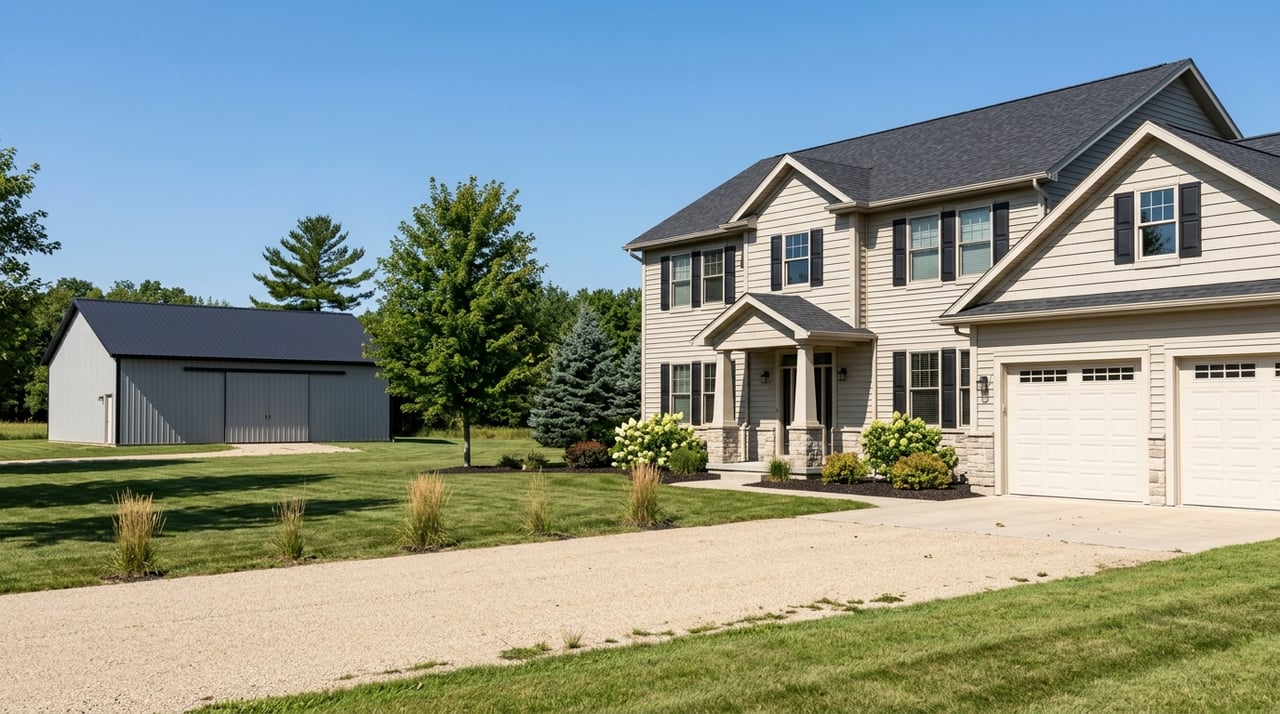
That makes barns, pole buildings, workshops, and oversized garages important pricing features. A buyer comparing two acreage homes may place significant value on usable accessory space, especially if the buildings are well placed and fit the property’s intended use.
The local market data for Nowthen is helpful, but it needs context. Minneapolis Area Realtors reported 28 closed sales in the rolling 12 months through April 2026, with a median sales price of $557,450, an average sales price of $569,834, 59 median days on market, and 3.0 months of inventory.
Those numbers show activity, but the sample size is small. In a thin market, broad averages can point you in the right direction, yet they should not be used as the final answer for an acreage home.
The city also notes an important difference between appraisal and assessment. An appraisal values one property, while an assessment uses mass-appraisal methods based on broader construction, sales, and neighborhood trends.
That is a useful reminder for sellers. Your acreage home may not fit neatly into a citywide average if the parcel’s usability, outbuildings, or legal features make it stand apart.
Recent sales in Nowthen show just how wide the value range can be:
These sales show that price is shaped by more than land size alone. Home size, condition, accessory buildings, pasture, legal use, and whether the sale is improved land or raw land all matter.
They also show why comparing an acreage home to a land-only parcel or a smaller rural homesite can lead to poor pricing decisions. The best comps are usually the ones that match your property’s function, not just its zip code.
The strongest pricing approach starts with properties that resemble yours in the ways buyers care about most. That includes acreage range, home size, condition, outbuilding inventory, and whether the land has features like pasture or open usable space.
A 5-acre property with a barn and functional pasture should not be treated the same as a 5-acre property with limited open use. Likewise, an improved acreage home should be separated from raw land when building a pricing strategy.
Before setting a list price, it helps to verify what the parcel actually supports. Sellers often assume buyers will see all acreage the same way, but in Nowthen, buildability, frontage, lot width, and land conditions can affect how the property is viewed.
The city’s planning department notes that minor subdivisions require at least a certificate of survey, and properties with ditches or wetlands may need wetland delineation. If a seller is wondering whether a parcel could be split, that question should be checked before it becomes part of the value story.
Nowthen property owners own and maintain private wells and septic systems. The city states that septic compliance inspections are required whenever ownership changes, and the MPCA recommends septic inspection and maintenance every 3 years.
From a pricing and negotiation standpoint, documentation matters. Sellers who can provide septic information before listing often make the process smoother for buyers and lenders.
Acreage buyers want to know what the property actually offers. While interior updates still matter, rural buyers also want a clear picture of how the land works.
That means your listing should clearly state total acres, horse eligibility if applicable, pasture area if known, outbuilding count and sizes, driveway and access details, and available well and septic information. Those details help buyers quickly understand whether the property fits their needs.
For a standard suburban home, the house tends to dominate the photo set. In Nowthen, the parcel deserves equal attention.
Photos should show the relationship between the home and the land. Aerial views, outbuildings, driveway approach, open ground, and any clearly usable areas can help buyers understand value much faster than interior photos alone.
Many acreage listings attract the same early questions. Buyers often want to know:
When those answers are verified up front, your listing becomes easier to trust. It also helps reduce confusion during showings and negotiations.
One of the biggest mistakes is assuming that extra acres automatically add value in a straight line. In Nowthen, the better question is what those acres allow a buyer to do.
If land is constrained by layout, access, wetlands, or zoning limits, buyers may not value it the same way they would value open and functional acreage. Pricing should reflect practical use, not just parcel size.
Sellers can hurt a listing by describing features too broadly. If a parcel is under 3 acres, it should not be marketed as horse-eligible.
The same caution applies to potential lot splits or building assumptions. If a feature has not been verified, it should not be treated as a selling fact.
Another mistake is failing to highlight outbuildings clearly. On acreage properties, detached shops, barns, and pole buildings can be central to buyer interest.
If those structures are legal, functional, and easy to understand, they should be priced and marketed as important assets. They are often part of the reason one rural property stands apart from another.
Before you list a Nowthen acreage home, it helps to gather the details buyers are most likely to ask for:
Acreage homes usually perform best when buyers can quickly understand both the home and the property around it.
Nowthen is a specialized market, even within Anoka County. With only 28 closed sales over the rolling 12 months through April 2026, each pricing decision carries more weight because there are fewer truly comparable properties.
That is why local, property-specific analysis matters so much. A seller needs more than a rough estimate. You need a pricing and marketing plan that explains how your land, improvements, and legal use fit the current market.
If you are preparing to sell an acreage, horse, or rural property in Nowthen, working with a team that understands both standard residential marketing and specialty-property details can make a real difference. For practical pricing guidance and full-service local support, contact Epic Realty Inc.
September 24, 2026
September 17, 2026

September 10, 2026
September 3, 2026
August 27, 2026
August 20, 2026
August 13, 2026
August 6, 2026
August 6, 2026
We’re here to work alongside you to help you make informed decisions when buying or selling your home or investment. Contact us to get started today.